The problem
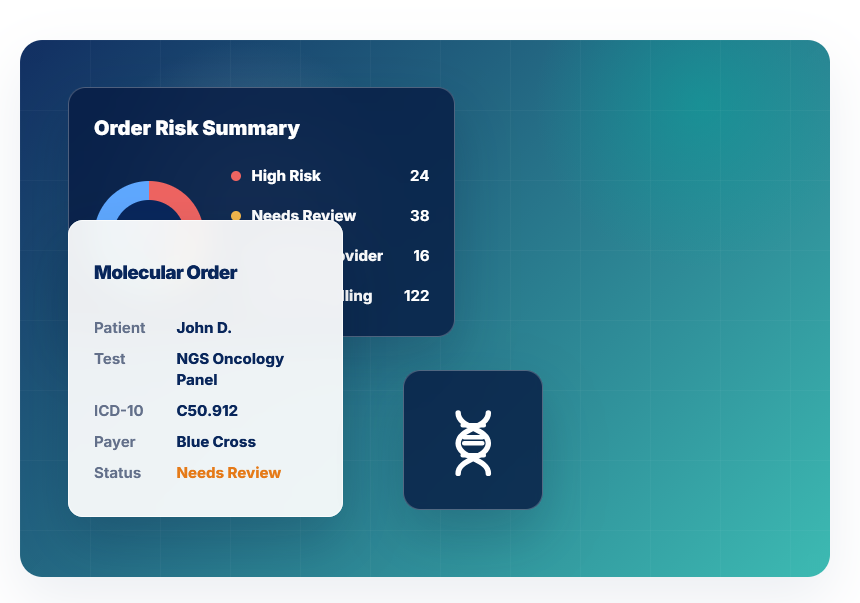
Molecular diagnostics creates a different level of complexity. Small errors at intake can create major issues later in billing.
A smarter workflow for molecular orders
Order comes in
Orders arrive from fax, HL7, portal, API, EHR, or manual intake.
Data is extracted and structured
Patient, provider, payer, diagnosis, specimen, test, and order details are normalized.
Test logic is reviewed
SignalDX compares the order against test catalog, compendium, CPT, panel, and reflex rules.
Policy risk is checked
Payer and policy rules are evaluated for coverage, medical necessity, prior auth and documentation concerns.
Staff review prioritized issues
Teams work from smart queues based on risk, missing data, corrections, and billing readiness.
Clean orders move forward
Resolved orders are prepared for downstream LIS, billing, or RCM handoff.
Why molecular labs use SignalDX
Reduce expensive downstream surprises
Identify risk before billing on high-value, high-scrutiny tests.
Improve test-code alignment
Review test-to-CPT logic earlier for cleaner billing data.
Prioritize high-risk orders
Focus staff on orders most likely to need review, docs, or correction.
Support provider clarification
Create clear correction workflows when diagnosis, docs, or test details are incomplete.
Strengthen auditability
Maintain a clear history of issues, corrections, actions, and exports.
Prepare cleaner billing handoffs
Give downstream systems more complete, structured, reviewed data.
Designed to sit before LIS and RCM
SignalDX does not replace your LIS, billing system, or RCM platform. It works before those systems to help molecular labs detect issues, review risk, and prepare cleaner order data. Think of SignalDX as the intelligence layer between intake and billing.